Volunteer Perspectives – it’s not one-way.
It’s commonly known that volunteering has many benefits, for multiple parties.
Volunteering Australia1 (amongst others) tell us that (in summary):
- Volunteering is associated with better perceived mental health and quality of life (for volunteers)
- Volunteering benefits vary among groups with mental health benefits especially pronounced for older people, unemployed people and people with chronic health conditions
Volunteer south west2 report that employees in organisations who run volunteer programs gain:
- a sense of personal satisfaction and fulfilment
- new learning experiences outside normal job parameters
- new and more positive perception of career, workplace, peers and management team
- unique opportunities to interact with people from other areas within the company thus improving communication and teamwork
- opportunities to meet new people and explore new situations and challenges
- opportunities for pathways into community involvement (employees reaching retirement age)
and that organisations themselves gain:
- increased company pride and loyalty by staff
- better employee attendance, recruitment and retention
- improved staff morale, motivation, team spirit and initiative
- enhanced workplace relationships
- new skill development opportunities for staff
- a more positive corporate image
- heightened and positive recognition by customers and consumers
- new business opportunities
- transformed relationship between the company and the local community
From a community perspective, many services, activities and marginalised groups’ care would fall by the way-side if not for volunteers. Particularly in relation to caring roles, volunteers often perform key tasks such as assisting with personal tasks, driving, information, counselling and support. It’s constantly challenging for the care and support sector to have sufficient funding, paid and volunteer staff to service their clients, patients, residents and users3. Sadly, the whole care and support system, and particularly in regional and rural Australia, are overloaded 4,5 plus experience shortfalls of available people, able to commit the hours required, or interested in regular volunteering. It’s a struggle.
On the other hand, in recent years, volunteering, particularly organisational volunteering has had somewhat of a make-over. Corporations have discovered that their employees feel happier (and stay longer) if they are approved recognised paid leave to provide care for their loved ones. Many organisations set up volunteering programs to pair employees with volunteer organisations and approve volunteering leave on a regular basis. Mentoring programs pairing paid employees with unemployed job-seekers abound.
Not a lot is said of the voluntees though (I am coining this word to give beneficiary, recipient and client a rest, more on this later) beyond stories of gratitude, friendship and “successful turnaround” tales.
In my small experience plus some anecdotal tales from others, I’d like to mention that the participating voluntees themselves bring a lot to the interaction beyond their plight! They are not just receivers.
Volunteering over many years and more recently with women seeking career connections, I’ve gained a lot. I’m grateful for the chance to hear so many people’s stories, to learn about so many lives and experiences and to increase my own knowledge about the world at large and the world up-close. The participants have given that to me, and to one another. I’m the grateful beneficiary!
I encourage people to volunteer for the oft-quoted reasons of giving back, reaching out, passing down and lifting up others but also point out you won’t be the only one giving and lifting, you will also receive, if you’re open to it. It might well be great for your mental health, feeling of connectedness, your CV, your Continuing Professional Development, and win you some kudos at work, but don’t be surprised to also learn something yourself!
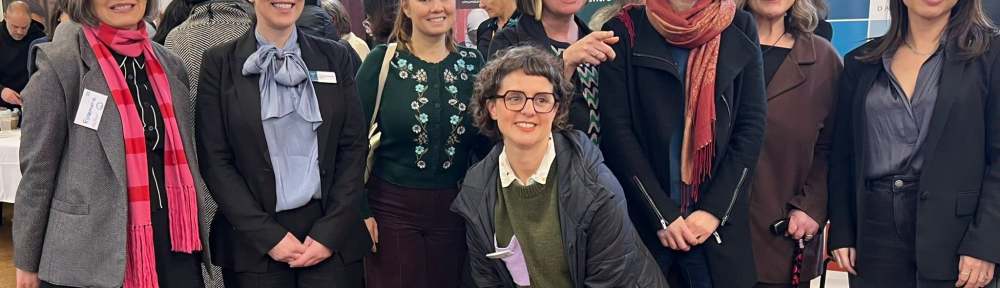
I thank Bridge Darebin and supporters, including Melbourne Polytechnic Skills and Job Centre, Workforce Australia: Local Jobs Program, North Eastern Melbourne and Inner Metropolitan Melbourne Employment Region (IMMER) for allowing me to be involved in the Women’s Career Connections Fair recently and the fortnightly Women’s Career Chats over the past year (and ongoing). I’ve learned a lot and I’d like to thank the other volunteers and all participants too. It was a great day with a lively atmosphere, the result of a lot of planning, collaboration and commitment from Bridge Darebin and enthusiastic input from those attending.
Karen Squire-Ryan
1 McDermott, J, (2021). Volunteering Australia, per volunteeringaustralia.org
2 “Benefits for Business – Corporate Volunteering”. Volunteer south west. Volunteering WA, Govt of WA. https://volunteersouthwest.org.au/benefits-for-business/ viewed 05/08/2026.
3 “Care and support sector volunteering” April 2026, Volunteering Australia per https://www.volunteeringaustralia.org/policy/care-and-support-sector-volunteering/
4 “Charity by Numbers: the volunteer effect” Australian Charities and Not-for-profits Commission (2025) cited on https://www.acnc.gov.au/media/news/new-report-highlights-essential-role-volunteer-run-charities-australia
5 ”Australia Fair – In Every Community”. Anglicare Australia (2025) cited on https://www.anglicare.asn.au/ Viewed 05/08/2025

